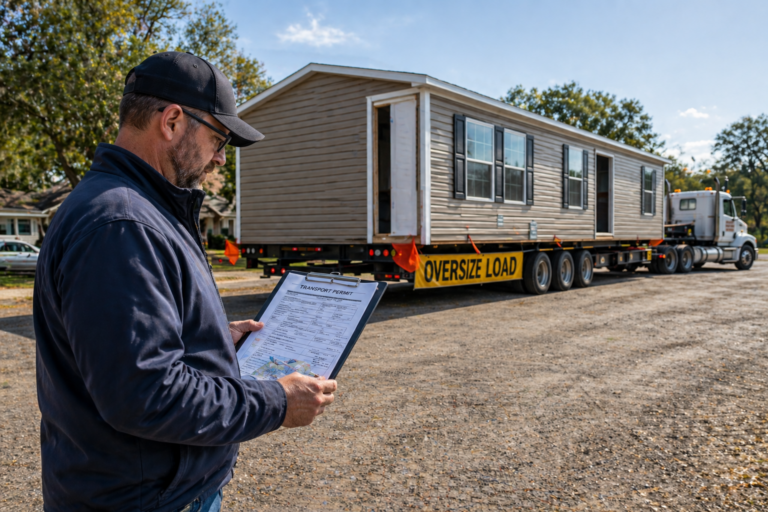

Mobile Home Moving Cost Guide: What It Really Costs to Move a Manufactured Home
Many people wonder “What does it cost to move a mobile home?” Moving a mobile home typically costs between $1,000 and $20,000, depending on the size of the home, the distance, permits, and the work needed at both ends of the move. Most movers charge $5 to $15 per mile for transportation alone, and a double-wide generally costs about twice as much to move as a single-wide.
The term “mobile home” might suggest an easy move, but in reality, moving a mobile home is quite the task since most weigh more than 18,000 pounds. Successful moves require careful planning, preparation, the right permits, specialized equipment, and an insured mover to transport it safely and legally. This guide breaks down what each part of the move costs so you can budget accurately and decide whether moving your home is the right choice.
In this guide:
- Average cost to move a single-wide
- Average cost to move a double-wide
- What factors affect mobile home moving costs
- Permit costs
- Utility disconnect costs
- Site preparation costs
- Setup and anchoring costs
- Is it worth moving a mobile home?
- Frequently asked questions
Average Cost to Move a Single-Wide Mobile Home
Moving a single-wide mobile home typically falls between $1,000 and $10,000, with transportation priced at $5 to $15 per mile. Your final cost depends on distance, permits, preparation, and setup at the new site.
A single-wide is moved as one section, so it requires less equipment and fewer crew hours than a double-wide. That makes it the more affordable home to relocate, but the total still includes more than the drive itself.
To estimate your transportation cost, multiply the distance by the per-mile rate. For example, a 100-mile move at $5 to $15 per mile comes to roughly $500 to $1,500 for transportation alone. Preparation, permits, utility work, and setup have their own costs.
What a single-wide move usually includes:
- Lifting the home and installing axles, tires, and a hitch
- Towing to the new location, often with one or more guide cars
- Permits and insurance
- Disconnecting utilities before the move and reconnecting them after
- Leveling and setup at the destination
Southern Utah Movers provides written quotes based on your home’s details, so you see the full cost before anything is scheduled.
Average Cost to Move a Double-Wide Mobile Home
Moving a double-wide costs about twice as much as moving a single-wide because it travels in two sections. Homeowners can plan to pay $5,000 to $20,000 to move their double-wide mobile home.
A double-wide is transported in two halves, which means more equipment, more crew time, and often more permits and escort vehicles. The sections must also be joined, sealed, and leveled at the destination, which adds to setup work.
Using the same mileage example, a 100-mile move at $5 to $15 per mile would be about $500 to $1,500 per section for transportation. Always get an individual quote, since roof pitch, frame size, and the home’s condition can change the price.
What Factors Affect Mobile Home Moving Costs?
The biggest factors are distance, the size of the home (single-wide or double-wide), permit requirements, the condition of the axles and hitch, and how much preparation and setup work is needed at each location.
Because so many variables apply, no two quotes look the same. The factors fall into two groups.
Location Factors that Affect Mobile Home Moving Costs
- Distance: Most movers charge $5 to $15 per mile, and also account for the travel to and from each location.
- Counties: Each county requires permits and legal paperwork to move and install a home. Crossing state lines means getting permits in both states.
- Park or private property: Moving out of a mobile home park is different from moving off private land, and the placement of your home within a park can also impact pricing.
- Destination township: Most townships require building permits to install a manufactured home.
Home Factors that Affect Mobile Home Moving Costs
- Size: The most important factor. A double-wide costs about twice as much as a single-wide.
- Frame size: Determines which piers and axles can safely support the home.
- Roof pitch: Especially relevant for double-wides.
- Manufacturer and year built: Construction standards vary. Older homes may cost more to move but less to insure.
- Siding type: Metal and vinyl siding affect weight, insurance, and cost.
- Drywall type: Finished drywall and standard mobile home drywall with batten strips differ in moving and repair costs.
- Axles: Missing axles must be replaced. Your mover should provide them, and the moving company supplies the tires.
- Hitch: If the original hitch is gone, a new one must be purchased and attached.
- Additions: Air conditioners, sheds, decks, and awnings must be removed or measured (length by width by height).
- Skirting: Skirting is removed before the move and usually replaced at the destination, so matching style and color adds to the cost.
Tip: Have answers ready for each of these questions before requesting a quote. It leads to a more accurate estimate.
Mobile Home Moving Permit Costs
Permit costs vary by county, state, and township. Moves across state lines require permits in both states, and most townships require a building permit to install the home.
Permits are a required part of the move, not an optional extra. You will generally encounter:
- Moving and transport permits for the route
- County permits and legal paperwork for moving and installing the home
- Building permits from the destination township
Fees depend on where you are moving from and to, which is why they are among the least predictable line items. Southern Utah Movers can help identify which permits your move requires.
Utility Disconnect Costs
Plan to cancel utilities in advance and pay a licensed plumber and electrician to safely disconnect the home before the move. The same licensed trades are needed to reconnect at the new site.
Utility work cannot be skipped or done informally. Before moving day:
- Cancel utility service in advance
- Hire a licensed plumber to disconnect water and sewer lines
- Hire a licensed electrician to disconnect electrical service
At the destination, utilities must be activated and connected by licensed plumbers and electricians. Rates vary by contractor, so request quotes for both the disconnect and reconnect.
Site Preparation Costs
Quick answer: If you are not moving into an existing mobile home park, the new site must be prepared before the home arrives. This is often one of the largest costs outside of transportation.
Preparing the new site may involve:
- Preparing the base or foundation area
- Setting up sewage
- Arranging for utility service to be available
- Obtaining building permits from the new township
On the origin side, preparation includes removing skirting, additions, decks, sheds, and air conditioning, securing windows and glass, packing belongings, and securing furniture. You can handle this yourself or have your movers do it for an additional cost.
Setup and Anchoring Costs
After delivery, the home must be leveled, have its axles and hitch removed, be reconnected to utilities, and be finished with skirting. These steps make the home safe, stable, and livable.
Setup at the new location typically includes:
- Removing axles and hitches
- Leveling the home
- Securing the home in place
- Connecting utilities through licensed professionals
- Reinstalling skirting
- Final inspections tied to your building permits
Skirting often needs to be matched or replaced, which adds cost.
Is It Worth Moving a Mobile Home?
Moving a mobile home makes sense when the total cost is less than half the value of your home. If the move costs more than half of what the home is worth, you are usually better off selling and buying a new or used manufactured home at your destination.
Use this simple test:
- Get a complete quote covering transportation, permits, disconnects, site preparation, and setup.
- Estimate your home’s current value.
- Divide the total move cost by the home’s value.
If the result is more than 50%, selling is likely the smarter financial choice. If it is less, moving is likely worth it, especially if your home is in good condition and has sentimental or practical value.
Another factor is the home itself. Older homes may cost more to move and may be more vulnerable to damage in transit.
Not sure which makes sense for your mobile home? Southern Utah Movers can give you a moving quote, and talk through options to sell so you can make the best decision for your individual situation.
Mobile Home Moving Frequently Asked Questions
How much does it cost to move a mobile home?
Moving a mobile home typically costs between $1,000 and $20,000, depending on the size of the home, the distance, permits, and setup requirements. Transportation is usually priced at $5 to $15 per mile.
How much does it cost to move a double-wide compared to a single-wide?
A double-wide generally costs about twice as much to move as a single-wide because it is transported in two sections and requires more equipment, crew time, and setup work.
Is it cheaper to move a mobile home or buy a new one?
If the move costs more than half the value of your home, it is usually cheaper to sell it and buy a new or secondhand manufactured home at your destination. If the move costs less than half, moving is typically the better value.
Do I need a permit to move a mobile home?
Yes. Counties require permits and legal paperwork to move and install a mobile home, and most townships require building permits at the destination. If you cross state lines, you need permits in both states.
Do I need to disconnect utilities before moving a mobile home?
Yes. Cancel utilities in advance and hire a licensed plumber and electrician to disconnect the home. Licensed professionals are also needed to reconnect utilities at the new site.
Why is moving a mobile home so expensive?
Most mobile homes weigh more than 18,000 pounds. Moving one requires lifting it to install axles and a hitch, slow travel on major highways, guide cars in most states, insurance, permits, and setup at the destination.
What should I look for in a mobile home mover?
Choose a licensed mover with insurance that covers any damage during the move, and get a written quote that spells out every cost.
How can I get an accurate quote?
Gather details about your home, including its size, year, siding, axles, hitch, additions, and skirting, along with your current location and destination. The more you know, the more accurate your quote will be.
Get an Accurate Quote from Southern Utah Movers
Every mobile home move is different, and the only way to know your true cost is a quote based on your home and your route. Southern Utah Movers relocates mobile homes throughout southern Utah and beyond. Contact us today for a straightforward quote and tips to make your move smooth.