
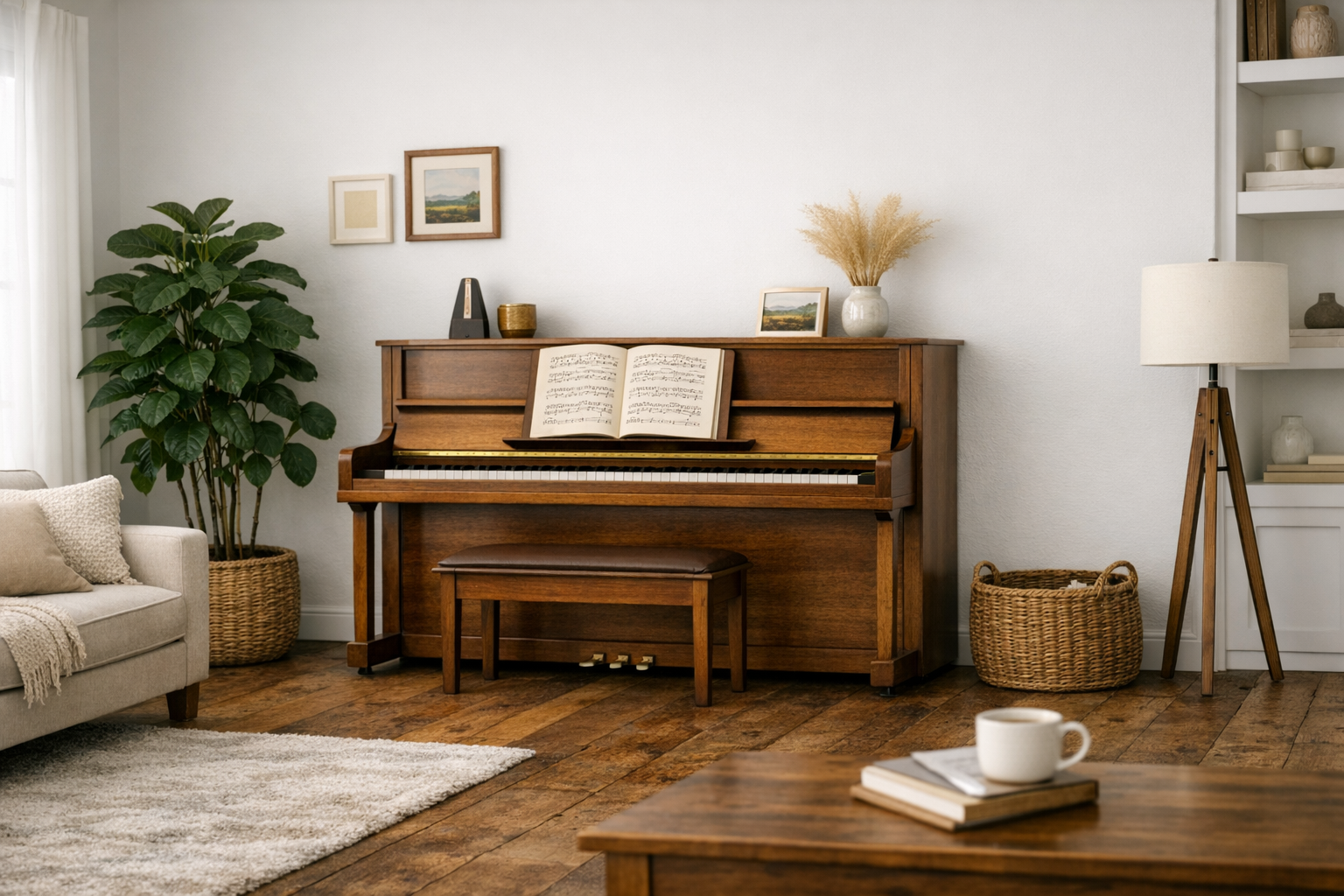
Climate and Pianos: How St. George’s Dry Heat Affects Your Instrument
If you live in St. George, you already know the desert climate has a personality of its own. Summers are long and hot, and the air is so dry that even everyday items in your home can feel the effects. With their delicate wood, felt, strings, and internal mechanisms, pianos are especially sensitive to these conditions.
Whether you’re a casual player, a parent with a young musician at home, or someone who owns a family heirloom, understanding how the St. George climate affects your piano is essential for keeping it sounding and performing its best.
This guide breaks down how dry heat, low humidity, and seasonal temperature swings impact pianos, and why proper care can make all the difference.
Why Pianos React So Strongly to Climate
A piano may look like a solid, sturdy piece of furniture, but inside it’s a living, breathing instrument made of natural materials. Wood expands and contracts with changes in temperature and humidity. Felt swells or shrinks. Metal strings tighten or loosen. Even small shifts can affect tuning, tone, and long‑term structural stability.
In a desert climate like St. George, these changes happen more dramatically and more frequently.
Dry Heat: The Biggest Challenge for Pianos in Southern Utah
St. George is known for its intense, dry heat. Summer temperatures often climb above 105°F, and the air can feel bone‑dry for months at a time. While humans can escape into air‑conditioned spaces, pianos don’t always have that luxury. Even though pianos live indoors, they can feel the effects from the hot weather particularly if they’re placed near windows, exterior walls, or rooms that fluctuate in temperature.
How dry heat affects your piano
Dry heat can quietly wear down your piano in ways you might not notice at first. Over time, the piano just doesn’t respond the way it used to, and it may need more frequent tuning or adjustments to stay sounding its best. Here are a few things going on inside the piano in hot climates:
- Shrink the soundboard, which affects tone and resonance.
- Loosen tuning pins, causing the piano to go out of tune more quickly.
- Dry out the wooden action parts, leading to sluggish or uneven key response.
- Cause cracks in the soundboard or bridges over time.
- Dry out felt components, making the piano sound harsher or more percussive.
These changes don’t happen overnight, but they accumulate. A piano that lives in a desert climate without proper care will age faster than one kept in a more moderate environment.
What you can do
The good news is that you don’t have to overhaul your home to protect your piano. There are several simple things you can do to lessen the effect of the hot seasons.
- Keep the piano away from direct sunlight and exterior walls.
- Avoid placing it near heating vents or drafty areas.
- Use a room humidifier during the driest months.
- Consider a piano‑specific humidity control system if your home fluctuates a lot.
- Schedule tunings more frequently. Many desert‑climate owners tune 2–4 times per year.
The goal is consistency. Pianos thrive in stable environments.
Humidity Levels: Why “Dry” Is Just as Harmful as “Damp”
People often associate humidity problems with coastal or rainy climates, but extremely low humidity can be just as damaging. St. George often sits between 10–20% humidity in the summer. This is far below the ideal 40–50% range for pianos.
Low humidity can cause:
- Loose tuning pins, making the piano unstable.
- Cracks in the soundboard, which affect tone.
- Separation of glued joints, especially in older pianos.
- Changes in key height and action regulation.
If you’ve ever noticed your piano sounding “thin,” “bright,” or “tinny” during the summer, low humidity is likely the culprit.
Humidity‑smart care tips
- Use a hygrometer to monitor the room’s humidity.
- Run a humidifier during the driest months.
- Avoid storing or placing the piano in basements, garages, or sunrooms.
- Keep the lid closed when not in use to reduce internal moisture loss.
Even a small bump in humidity can make a noticeable difference in tone and tuning stability.
Temperature Swings: The Silent Stressor
While St. George is known for its heat, the temperature can swing dramatically between day and night – sometimes by 30 degrees or more. These fluctuations cause the wood inside the piano to expand and contract repeatedly, which can lead to tuning instability and long‑term wear.
Where temperature swings matter most
- Pianos placed near windows
- Rooms with poor insulation
- Homes that turn off AC during the day
- Pianos stored in garages or sheds (never recommended)
Keeping your piano in a temperature‑stable room is one of the best things you can do for its longevity.
How Professional Piano Movers Protect Pianos in Desert Climates
Even if you take great care of your piano at home, moving it introduces a whole new set of climate‑related challenges. Pianos are heavy, delicate, and sensitive to sudden environmental changes.
Professional piano movers in St. George, Utah understand the realities of moving a piano in dry, hot weather and take precautions that help keep the instrument stable and protected.
How movers protect pianos from heat and dryness
Professional movers typically:
- Use thick, breathable moving blankets to prevent heat exposure
- Avoid leaving the piano in direct sunlight during loading
- Minimize time spent in hot trucks or outdoor areas
- Secure the piano to prevent vibration damage (which can worsen in dry climates)
- Use climate‑aware handling techniques for older or more fragile instruments
They also understand how to navigate St. George’s terrain, including steep driveways and tight indoor spaces, without exposing the piano to unnecessary stress.
Why climate‑aware moving matters
A piano that’s moved improperly in desert heat can suffer in several ways. The tuning can shift suddenly, the finish may crack, joints can loosen, and the soundboard can experience unnecessary stress. Even the felt inside the action can dry out or compress. Knowing how these issues happen makes it easier to understand why proper handling matters so you know what to look for when it comes time to hire professional movers.
Long‑Term Care: Keeping Your Piano Healthy in a Desert Climate
Caring for a piano in St. George isn’t difficult, it just requires consistency. Think of it like caring for a living instrument that responds to its environment.
Long‑term care checklist
- Tune 2–4 times per year
- Keep humidity between 40–50% when possible
- Avoid direct sunlight
- Keep the piano in a temperature‑stable room
- Use a humidifier or piano humidity system
- Clean dust regularly (dry cloth only — no sprays)
- Have a technician inspect the action every 1–2 years
These small habits will help your piano stay stable, responsive, and beautiful for decades.
St. George’s desert climate is part of what makes the area so beautiful, but it also creates unique challenges for piano owners. Dry heat, low humidity, and temperature swings all affect how your piano sounds, feels, and ages. With a little awareness and consistent care, you can protect your instrument and keep it performing at its best.And if you ever need to move your piano, climate‑aware handling from professional piano movers in St. George, Utah ensures your instrument stays safe every step of the way.